

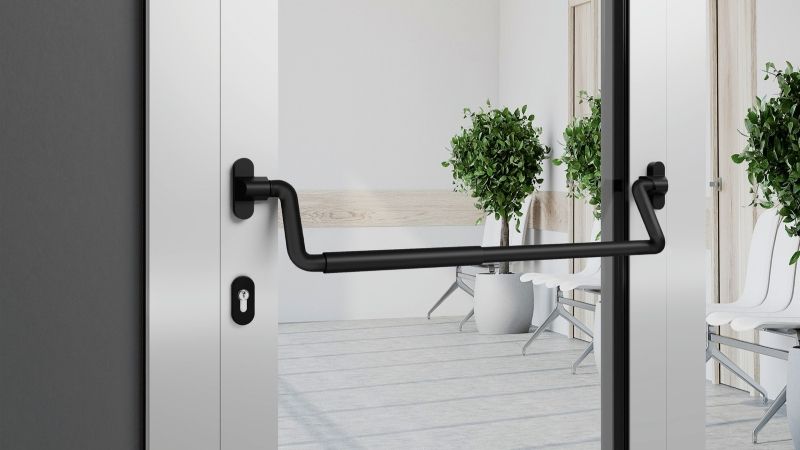
In commercial, industrial, and institutional buildings, emergency exit hardware plays a direct role in occupant safety and building code compliance. Commonly known as panic bars, crash bars, or exit devices, these heavy-duty mechanical mechanisms are installed on exterior egress doors and fire exit stairwells to allow rapid, unassisted building evacuation during emergencies. Because panic devices endure frequent daily operation in high-traffic environments, internal springs, latches, and dogging mechanisms eventually experience mechanical wear. Securing prompt, professional repairs for malfunctioning crash bars maintains facility security, preserves life-safety readiness, and prevents costly municipal code violations.
The Operational Role of Panic Exit Devices in Egress Safety
Panic bars are designed around a fundamental life-safety principle: any individual moving toward an emergency exit should be able to release the door latch instantly by applying light body pressure against a horizontal push pad or crossbar. This mechanism eliminates the need to turn knobs, flip thumbturns, or manipulate complex keys during a panic-driven evacuation.
Beyond emergency egress, panic exit hardware must balance life safety with everyday building security. During normal business hours, the hardware must latch reliably to keep exterior doors closed against weather, drafts, and unauthorized entry from the outside. In the event of a power outage or building alarm activation, mechanical panic hardware operates independently of electrical power, ensuring egress paths remain open regardless of facility conditions.
Common Signs of Mechanical Degradation in Panic Hardware
Because panic hardware is composed of interconnected internal springs, levers, actuating rods, and latch bolts, mechanical wear manifests through distinct operational symptoms. Identifying these indicators early prevents total door failure or unexpected lockouts.
- Latch Fail to Retract Fully: When the push pad is depressed, the latch bolt may only partially retract, causing the door to drag against the frame strike plate or catch during opening.
- Failure to Latch Upon Closing: Worn internal return springs or misaligned door closers can prevent the latch bolt from extending fully into the strike pocket, leaving the building vulnerable to unauthorized entry.
- Loose or Sagging Push Pads: Frequent physical impacts can loosen mounting screws, internal linkages, or end caps, resulting in a wobbly bar that requires excessive force to operate.
- Broken Dogging Mechanisms: The dogging feature—used in non-fire-rated exit devices to hold the latch retracted for free push-pull access during business hours—can wear down, preventing the door from remaining unlocked during open hours.
- Misalignment with Frame Strike Plates: Structural frame shifting, hinge wear, or heavy door usage can shift the door leaf out of alignment, causing the latch bolt to bind against the strike jamb.
Key Differences Between Fire-Rated and Standard Panic Hardware
Selecting and maintaining panic hardware requires understanding the distinction between standard crash bars used on exterior doors and specialized fire-rated exit hardware used on interior fire barriers.
| Feature / Standard | Standard Panic Hardware | Fire-Rated Exit Hardware |
| Primary Installation Zone | Exterior entrance doors, non-fire-rated emergency exit corridors. | Fire-rated stairwell doors, mechanical room entrances, corridor fire doors. |
| Mechanical Dogging Feature | Permitted (allows manual latch retraction for free daytime entry). | Strictly Prohibited (door must automatically self-close and positive-latch at all times). |
| Certification Testing | Tested for high-frequency mechanical cycles and impact resistance. | Tested for continuous fire endurance, thermal pressure, and mechanical life-safety standards. |
| Thermal Expansion Design | Standard metal linkages and exterior strike plates. | Engineered with internal steel components that withstand intense heat without melting or releasing the latch. |
Modifying fire-rated panic hardware with unapproved parts or attempting to add manual dogging features to a fire exit door violates municipal fire codes and compromises the building’s passive fire protection strategy.
Professional Diagnostic and Repair Workflow
Restoring a malfunctioning panic bar requires a systematic approach to identify whether the issue lies within the touch bar mechanism, internal vertical rods, or external trim hardware.
Step 1: Physical Inspection and Alignment Check
Technicians begin by assessing the door leaf alignment, hinge tension, and frame squareness. If a door sags, adjusting the hinges or resetting frame fasteners is required before tuning internal panic bar components, as frame drag directly causes latch binding.
Step 2: Disassembly and Internal Component Evaluation
The protective end caps and push bar covers are removed to expose internal actuating arms, return springs, and dogging cams. Worn springs, bent connecting rods, or sheared pins are identified and replaced with grade-matched manufacturer components.
Step 3: Latch and Strike Calibration
The strike plate mounted on the door frame is inspected for wear, metal burrs, or loose fasteners. Technicians adjust strike depth and shims to ensure the latch bolt engages smoothly with zero physical play while maintaining proper weather stripping compression.
Step 4: Vertical Rod and Multi-Point Alignment
For surface-mounted or concealed vertical rod panic devices—common on double exit doors—technicians calibrate the top and bottom latch retraction rods simultaneously. Proper rod adjustment ensures both top and bottom latches clear their frame keepers cleanly when the push bar is pressed.
When facility managers face sticking crash bars, latching failures, or municipal inspection notices, scheduling professionalpanic bar repair ensures that exit devices are calibrated to life-safety codes, fully operational, and structurally reliable.
Essential Maintenance Practices for Commercial Exit Hardware
Implementing a routine preventative maintenance schedule extends the lifespan of panic exit hardware and prevents sudden mechanical failure:
- Monthly Latch Engagement Audits: Test every panic door monthly by opening it fully and letting the door closer pull it shut to verify the latch bolt engages the strike plate without manual assistance.
- Clean and Lubricate Internal Moving Parts: Spray internal pivot points and latch assemblies bi-annually with a dry PTFE or silicone lubricant. Avoid heavy grease, which attracts dirt and forms a abrasive paste inside the mechanism.
- Inspect Mounting Screws and End Caps: Check and tighten external mounting hardware regularly to prevent horizontal push bars from working themselves loose under heavy traffic.
- Clear Exit Pathways and Operating Thresholds: Ensure that exterior drop zones outside panic doors remain clear of snow, ice, or debris that could impede the door slab from swinging fully open during an emergency.
By maintaining properly aligned panic exit hardware, commercial property owners satisfy building life-safety codes, protect physical assets, and ensure that building occupants can evacuate safely during critical emergencies.
