


Running a field service team comes with its fair share of challenges. From juggling multiple work orders and unexpected last-minute schedule changes to ensuring that technicians have the right tools and information on-site, managing everything efficiently can feel overwhelming. Many service managers struggle with communication gaps, delayed reporting, and inconsistent service delivery, all of which can directly impact customer satisfaction and team productivity.
This is where mobile field service software becomes a game-changer. By centralizing scheduling, dispatching, and real-time communication into a single platform, these solutions empower service teams to work smarter, not harder. Modern field service apps allow managers to monitor progress on the go, reduce administrative tasks, and provide technicians with instant access to work orders, customer history, and inventory data.
In this article, we’ll explore how mobile field service software can transform your operations, boost service team productivity, and streamline your field service management. By the end, you’ll understand the key features to look for and how to choose the right solution to fit your business needs.
What is Mobile Field Service Software?
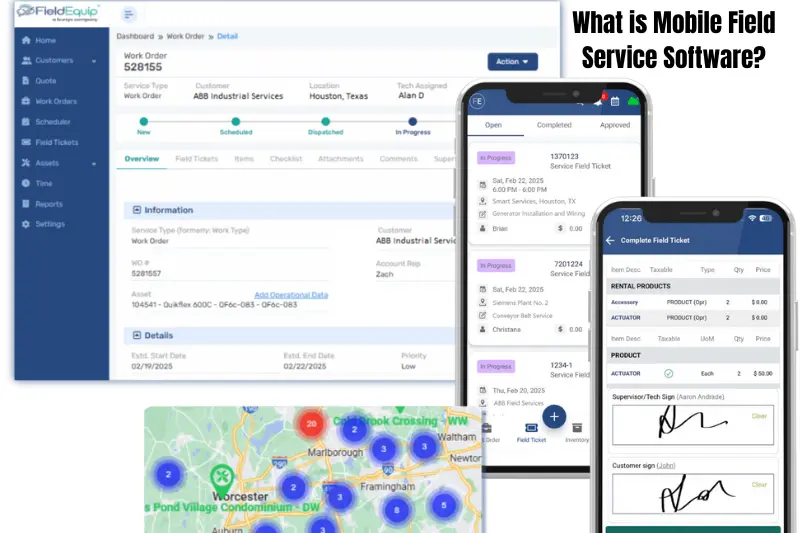
At its core, mobile field service software is a digital solution designed to help businesses manage and streamline their field operations. Unlike traditional paper-based systems or desktop-only software, mobile field service solutions put real-time information directly into the hands of technicians and managers, no matter where they are.
With this software, service teams can receive job assignments instantly, update work order status on the go, and communicate directly with the office or other team members. It’s not just about keeping track of tasks-it’s about creating a more organized, responsive, and efficient field workforce.
Modern field service apps often include features such as GPS tracking, inventory management, and automated reporting, which together simplify complex operations. Businesses that adopt these solutions see improvements not only in task completion times but also in overall service team productivity and customer satisfaction.
By integrating mobile field service software into your operations, you gain a centralized system that supports better decision-making, faster response times, and a smoother field service management process.
Key Features of Mobile Field Service Software

Choosing the right mobile field service software means understanding the features that can truly transform your field operations. Modern solutions go far beyond simple scheduling-they empower your team to work efficiently, reduce errors, and deliver better service. Here are the key features to look for:
Real-Time Scheduling and Dispatching
Efficient scheduling is the backbone of any field service operation. With real-time dispatching, managers can assign tasks instantly, track technician locations, and respond quickly to urgent service requests. This improves workflow, reduces downtime, and enhances overall service team productivity.
Work Order Management
Mobile field service software centralizes all work orders in one platform. Technicians can view, update, and complete jobs directly from their devices, ensuring accurate and timely reporting. Managers gain full visibility into ongoing tasks, making field service management smoother and more transparent.
Mobile Access and Offline Functionality
Technicians often work in areas with limited connectivity. The best software allows mobile access and offline functionality, so updates can be made anywhere and synced automatically once online.
Customer Communication Tools
Keeping customers informed is critical. Features like automated notifications, service reminders, and instant updates improve satisfaction and trust.
Analytics and Reporting
Data drives decisions. Mobile field service software offers detailed reporting and analytics to track performance, optimize routes, and identify areas for improvement.
By integrating these features, businesses can streamline operations, reduce errors, and boost both team efficiency and customer satisfaction.
Benefits of Mobile Field Service Software
Adopting mobile field service software brings measurable advantages for businesses of all sizes. By providing a centralized platform for managing field operations, this technology not only simplifies day-to-day tasks but also drives efficiency, improves customer experiences, and boosts service team productivity. Here are the key benefits:
Increased Productivity for Field Teams
With real-time access to work orders, schedules, and customer information, technicians spend less time on administrative tasks and more time completing jobs. This leads to faster service, fewer delays, and higher overall productivity.
Enhanced Customer Satisfaction
Keeping customers informed with automated updates, reminders, and transparent service progress helps build trust and loyalty. Happy customers are more likely to return and recommend your services.
Streamlined Operations and Reduced Errors
Mobile field service software minimizes manual data entry and communication gaps. Managers can easily track job progress, while technicians can update work orders on the go, reducing mistakes and missed tasks.
Better Resource Management
From inventory tracking to route optimization, businesses can allocate resources more efficiently. This ensures that teams have the right tools and materials on-site, saving time and reducing operational costs.
By leveraging these benefits, companies can transform their field service management process, making it more organized, efficient, and customer-focused.
How to Choose the Right Mobile Field Service Software
Selecting the right mobile field service software can feel overwhelming, given the wide variety of options available. The key is to focus on features, usability, and scalability that align with your business needs. Here’s a guide to help you make the best choice:
Evaluate Your Business Needs
Start by identifying the specific challenges your team faces. Do you need better scheduling, real-time tracking, or enhanced customer communication? Understanding your priorities ensures you select software that directly addresses your pain points.
Check for Mobile Accessibility
Your field technicians need access on the go. Look for solutions that work on smartphones and tablets, with offline functionality for areas with poor connectivity. Field service apps should empower your team, not slow them down.
Integration Capabilities
Choose software that integrates seamlessly with your existing systems-like CRM, ERP, or inventory management. This ensures smooth data flow and reduces duplicate work.
Ease of Use and Training
A user-friendly interface minimizes adoption resistance. Consider platforms with intuitive dashboards and training resources to get your team up and running quickly.
Scalability and Support
Your business will grow, and your software should grow with it. Ensure the platform can handle increasing users, service areas, and advanced features. Reliable customer support is also critical for quick problem resolution.
By keeping these factors in mind, you can select field service management tools that enhance efficiency, streamline operations, and improve your service team productivity.
Top Trends in Mobile Field Service Software
The world of field service technology is constantly evolving. Staying ahead of trends ensures your business remains competitive, efficient, and responsive to customer needs. Here are some of the most significant trends in mobile field service software today:
AI Integration and Predictive Maintenance
Artificial intelligence is transforming field service by predicting equipment failures before they occur. With AI-powered analytics, companies can schedule preventive maintenance, reduce downtime, and save costs.
Automation of Routine Tasks
Automation is helping service teams focus on high-value work. From generating work orders to sending customer notifications, automated processes streamline field service management and reduce human errors.
Internet of Things (IoT) Connectivity
IoT-enabled devices provide real-time insights into equipment performance. Technicians can monitor machinery remotely, troubleshoot issues faster, and respond proactively, improving overall service team productivity.
Mobile-First and Cloud-Based Solutions
Field teams increasingly rely on mobile devices to access data anywhere, anytime. Cloud-based platforms ensure information is always up-to-date, secure, and accessible, even when technicians are offline.
Enhanced Customer Experience Tools
Modern software includes features like live service tracking, instant communication, and feedback collection, helping businesses deliver a more personalized and efficient customer experience.
By adopting these trends, companies can stay ahead in the competitive field service industry, improve efficiency, and provide exceptional service using field service apps.
Common Challenges and How to Overcome Them
While mobile field service software offers many benefits, businesses may face certain challenges during implementation and adoption. Understanding these obstacles-and how to address them-ensures a smoother transition and maximizes ROI.
Resistance to Change
Technicians and managers accustomed to manual processes may resist new technology. Overcome this by providing hands-on training, highlighting the benefits for day-to-day tasks, and gradually introducing features.
Data Security Concerns
Storing sensitive customer and operational data in mobile apps can raise security worries. Choose platforms with strong encryption, regular updates, and compliance with industry standards to safeguard your information.
Integration Issues
Some software may not easily integrate with existing systems like CRM or inventory management. Opt for solutions with flexible APIs and pre-built integrations to maintain seamless workflows.
Connectivity Limitations
Field teams often work in areas with poor network coverage. Ensure your chosen software supports offline functionality, allowing technicians to update work orders and sync data once connectivity is restored.
Measuring ROI
Without clear metrics, it’s hard to gauge the software’s impact. Establish KPIs such as job completion times, customer satisfaction, and team productivity to track improvements effectively.
By proactively addressing these challenges, businesses can fully leverage field service management tools and achieve greater efficiency, accuracy, and satisfaction across their service team.
Case Studies: How Businesses Benefit from Mobile Field Service Software
Seeing real-world examples helps illustrate the impact of mobile field service software on operations, productivity, and customer satisfaction. Here are a couple of success stories:
Improving Efficiency for a Plumbing Company
A mid-sized plumbing business struggled with delayed work orders, lost paperwork, and communication gaps between office staff and field technicians. After implementing a field service management app, the company saw:
- 30% faster job completion times
- Reduced paperwork errors by 90%
- Improved scheduling and real-time tracking for all technicians
This transformation allowed the team to handle more jobs daily while maintaining high customer satisfaction.
Enhancing Customer Experience for an HVAC Service Provider
An HVAC service provider faced challenges with customer communication and missed appointments. By adopting mobile field service software, they were able to:
- Send automated service reminders and updates to customers
- Provide technicians with instant access to service histories and inventory
- Increase customer satisfaction scores by 25% within six months
These examples highlight how leveraging the right software can improve both operational efficiency and client relationships.
By integrating mobile field service apps, businesses can solve common operational challenges while boosting service team productivity and overall efficiency.
Conclusion
Implementing mobile field service software is no longer a luxury-it’s a necessity for businesses looking to streamline operations, boost service team productivity, and enhance customer satisfaction. From real-time scheduling and work order management to advanced analytics and mobile access, these solutions empower field teams to work smarter, not harder.
By choosing the right platform, addressing common challenges, and staying updated with industry trends, businesses can transform their field service management process into a more efficient, responsive, and customer-focused operation. Real-world examples show that adopting mobile field service apps leads to measurable improvements in efficiency, accuracy, and client satisfaction.
Investing in the right field service management tools today sets the stage for long-term success, helping your business stay competitive while delivering exceptional service. Don’t wait-explore mobile field service software and take your field operations to the next level.
