

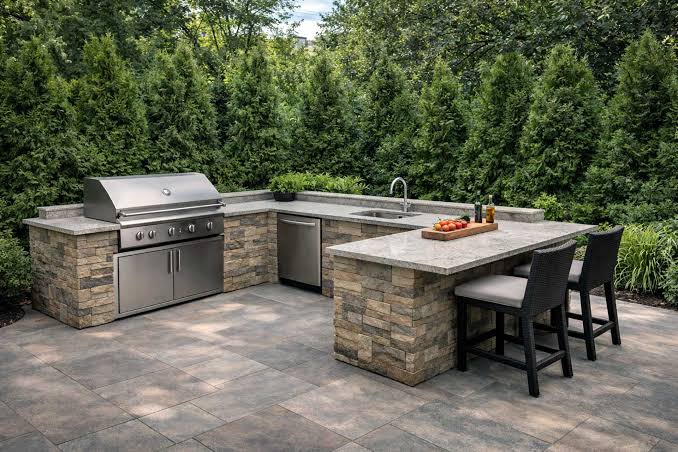
Modern residential design increasingly emphasizes extending interior living spaces out into the fresh air. Among the most popular upgrades for backyard transformations is the combination of custom outdoor kitchens and structural hardscaping. While a standalone grill or temporary patio furniture offers basic functionality, pairing a fully equipped culinary station with permanent stone masonry, custom paver decking, and retaining walls creates an integrated entertainment hub. Beyond boosting home utility, a well-planned outdoor kitchen built atop a durable hardscape foundation enhances property value and optimizes workflow for outdoor dining. Understanding how spatial layout, material compatibility, and structural hardscaping interact allows homeowners to design a cohesive, highly functional outdoor environment built for year-round enjoyment.
The Foundation: Why Hardscaping Is Essential for Outdoor Kitchens
An outdoor kitchen is only as stable and long-lasting as the surface beneath it. Heavy appliances, concrete counter island frames, stone veneer facing, and granite countertops exert significant downward force. Installing culinary features over soft grass, unstable soil, or thin concrete slabs leads to settling, shifting, and surface cracking over time.
Structural hardscaping provides the necessary foundation for cooking stations in several key ways:
- Load-Bearing Stability: Compacted aggregate bases paired with high-density concrete pavers or natural stone slabs distribute heavy structural weight evenly, preventing structural sinking or tipping.
- Level Cooking and Dining Surfaces: Cooking appliances, refrigeration units, and prep counters require precise level alignment to function safely and drain properly. Interlocking paver systems and leveled stone decks create a flat baseline across the entire cooking zone.
- Utility Integration: Running underground gas lines, electrical conduits, and plumbing pipes for sinks and ice makers requires strategic installation beneath the hardscape surface before paver placement or masonry work begins.
Designing Functional Layouts and Work Zones
A successful outdoor kitchen applies the same ergonomic principles used in indoor kitchen design. Establishing an efficient workflow ensures that cooks can prepare, cook, and serve meals without feeling cramped or isolated from guests.
Layout planning focuses on establishing clear activity zones:
- The Hot Zone: Houses the primary cooking appliances, such as gas grills, smoker cabinets, power burners, or pizza ovens. Proper ventilation and clearance from combustible materials are critical considerations for this area.
- The Cold Zone: Dedicated to food preservation and beverage service, incorporating under-counter refrigerators, wine coolers, and ice drawers.
- The Wet Zone: Features outdoor sinks, beverage troughs, and trash recycling bins to simplify food preparation and post-meal cleanup.
- The Prep and Dry Zone: Offers ample countertop space made from non-porous natural stone, stainless steel, or polished concrete for chopping, seasoning, and staging serving platters.
To connect these cooking elements seamlessly into the surrounding yard, working alongside experiencedoutdoor kitchen builders ensures that structural foundations, utility connections, and custom counter layouts are tailored specifically to the home’s existing architecture and hardscape design.
Integrating Seating, Shelter, and Ambient Features
To turn a basic grill station into a comprehensive entertainment venue, hardscape design should extend beyond the cooking island to accommodate guests comfortably.
Built-In Hardscape Seating and Bar Counters
Extending a granite or stone countertop overhang on the outside of a kitchen island creates an instant bar-height dining area. Pairing counter seating with integrated hardscape seat walls constructed from stacked stone or block masonry provides permanent seating around nearby fire pits or dining tables without cluttering the patio with excess furniture.
Shade Structures and Overhead Coverage
Protecting cooking appliances and guests from intense afternoon sun or light rain extends the usability of the space. Custom timber pergolas, solid-roof pavilions, or aluminum louvers anchored directly into the concrete hardscape footings offer necessary shade while defining the kitchen as an exclusive outdoor room.
Vertical Elements and Retaining Walls
On sloped properties, retaining walls play a dual role in outdoor kitchen design. Structurally, they hold back soil to create flat, usable patio space for dining tables and cooking islands. Aesthetically, stone retaining walls frame the kitchen area, act as windbreaks for open grill flames, and offer vertical surfaces for mounting ambient LED downlighting.
Material Selection for Outdoor Durability
Materials used in outdoor kitchen and hardscape construction must withstand continuous exposure to UV rays, temperature shifts, grease splatters, and moisture.
- Countertops: Non-porous natural stones like honed granite, quartzite, and specialized concrete hold up exceptionally well outdoors. Porous stones like marble or unsealed limestone should be avoided in cooking zones, as cooking oils and acidic foods can cause permanent staining.
- Island Framework and Veneers: Modern outdoor kitchen frames utilize rust-proof galvanized steel studs or dense concrete masonry units (CMU). Finishing the exterior walls with stacked natural stone veneer, concrete block facing, or smooth stucco complements nearby patio pavers.
- Flooring and Decking: Slip resistance around cooking areas is essential. Textured concrete pavers, travertine, and natural flagstone provide grip underfoot even when exposed to minor spills or rainwater.
Elevating Everyday Outdoor Living
Pairing a custom outdoor kitchen with structural hardscaping transforms an ordinary backyard into a functional extension of the home. By combining durable stone foundations, ergonomic kitchen layouts, integrated seating, and weather-resistant materials, homeowners create an inviting space tailored for cooking, dining, and gathering. Investing in professional hardscape engineering ensures that the outdoor living area remains stable, attractive, and low-maintenance for years to come.
