


Introduction
In today’s fast-paced world of innovation, understanding how mature a technology is before it reaches the market or operational use is crucial. This is where the Technology Readiness Level (TRL) comes into play. TRL is a standardized measurement system that helps organizations assess the maturity of emerging technologies and determine how close they are to being fully operational.
Originally developed by NASA, the TRL scale was designed to evaluate the readiness of aerospace technologies, ensuring that new systems could meet rigorous mission requirements before deployment. Over time, the concept has expanded beyond aerospace, guiding industries from defense and energy to startups in making informed decisions about research, development, and investment.
By using the TRL framework, organizations can reduce risks, plan effectively, and prioritize resources, making it an essential tool for anyone involved in technological innovation.
What is Technology Readiness Level (TRL)?
The Technology Readiness Level (TRL) is a systematic metric used to evaluate how mature a particular technology is, from initial concept to fully operational deployment. Essentially, TRL provides a clear framework to assess whether a technology is ready for real-world application or if it requires further development and testing.
Developed initially for aerospace projects, TRL allows organizations to measure progress objectively and communicate the maturity of their technology to stakeholders, investors, and partners. Each TRL represents a step in the journey of technology development, making it easier to plan resources, manage risks, and prioritize projects effectively.
Beyond aerospace, TRL has been adopted in sectors such as defense, renewable energy, medical devices, and even software development. By understanding the TRL of a technology, companies can make strategic decisions on research investment, prototype testing, and commercialization.
Understanding the TRL Scale
The TRL scale is a nine-level framework that measures the maturity of a technology from concept to full deployment. Each level provides insight into the development stage, helping organizations assess readiness, allocate resources, and reduce risks. Understanding the TRL scale is essential for planning projects, securing funding, and ensuring successful technology implementation.
Here’s a breakdown of the TRL levels:
| TRL Level | Description |
|---|---|
| TRL 1 | Basic principles observed and reported. Initial scientific research begins. |
| TRL 2 | Technology concept formulated. Practical applications are identified. |
| TRL 3 | Experimental proof of concept. Active research and lab testing conducted. |
| TRL 4 | Technology validated in a laboratory environment. |
| TRL 5 | Technology validated in a relevant environment outside the lab. |
| TRL 6 | Technology demonstrated in a relevant environment, often through prototypes. |
| TRL 7 | System prototype demonstrated in an operational environment. |
| TRL 8 | Technology completed and qualified through rigorous testing and demonstration. |
| TRL 9 | Technology proven in actual operational conditions and ready for full deployment. |
The TRL scale provides a clear roadmap for both developers and investors. It helps identify when a technology is ready to move from research to implementation, and it ensures that resources are directed efficiently toward the most promising innovations.
NASA TRL: The Gold Standard
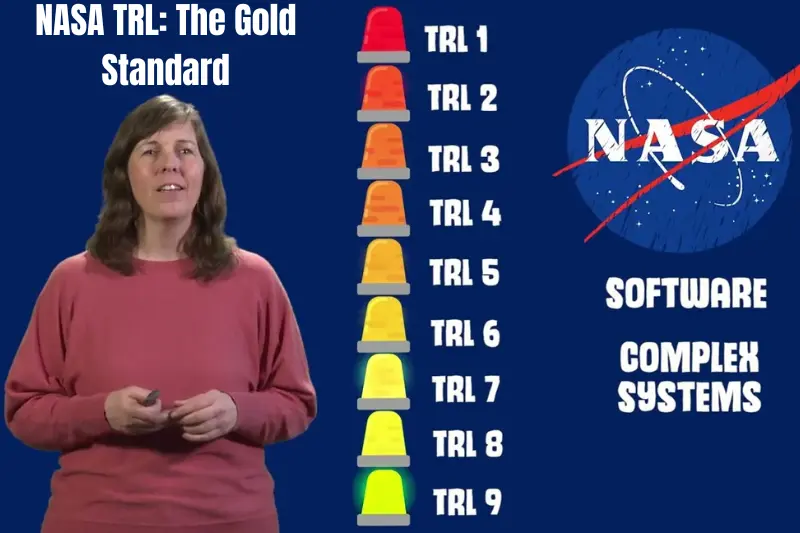
The NASA TRL framework is the most recognized and widely referenced application of the Technology Readiness Level concept. Originally developed to assess the maturity of aerospace technologies, NASA’s TRL system ensures that complex systems and components are sufficiently tested and proven before they are deployed on space missions.
NASA’s approach to TRL emphasizes rigorous testing, validation, and risk management. Each level—from TRL 1, where basic principles are observed, to TRL 9, where technology is fully operational—provides clear criteria for assessing readiness. This structured method allows project managers, engineers, and stakeholders to make informed decisions about funding, development timelines, and project feasibility.
Over time, NASA TRL has become a benchmark beyond the aerospace industry. Organizations in defense, renewable energy, medical technology, and even software development often adopt NASA’s TRL framework to evaluate their innovations. By following this standard, companies can communicate the maturity of their technology to investors and partners with confidence and clarity.
What is TRL 9?
TRL 9 represents the pinnacle of the Technology Readiness Level (TRL) scale. At this stage, a technology is fully mature, proven in real operational conditions, and ready for full deployment. Reaching TRL 9 means the technology has successfully passed all development, testing, and validation phases, making it reliable for everyday use or commercial application.
For example, in aerospace, a propulsion system or satellite instrument that has been launched, tested in space, and is functioning as intended would be considered TRL 9. Similarly, in other industries, medical devices, renewable energy systems, or software platforms that are fully operational and widely implemented also reach this level.
Understanding TRL 9 is crucial for organizations and investors because it signifies the end of technological uncertainty. Achieving this stage reduces risks, ensures high performance, and enables confident commercialization or large-scale deployment.
Benefits of Using TRL
The Technology Readiness Level (TRL) framework offers numerous advantages for organizations, investors, and project teams. By providing a clear and standardized way to assess technology maturity, TRL helps guide decision-making throughout the innovation process. Here are the key benefits:
- Risk Reduction – TRL allows teams to identify potential technical and operational risks early, reducing the chances of costly failures during development or deployment.
- Resource Optimization – By knowing a technology’s readiness, organizations can allocate funding, personnel, and time more efficiently, focusing on technologies with the highest potential.
- Improved Communication – TRL provides a common language for stakeholders, engineers, and investors, making it easier to convey the maturity and readiness of a technology.
- Informed Investment Decisions – Investors can evaluate which technologies are closer to market readiness and which require additional development, supporting smarter funding choices.
- Strategic Planning – Organizations can plan technology roadmaps, set realistic milestones, and prioritize projects based on their TRL level, ensuring smoother transitions from research to deployment.
Overall, using the TRL scale ensures a structured, objective approach to innovation, helping organizations move promising technologies from concept to reality efficiently and effectively.
How to Assess Technology Readiness Level
Assessing a technology’s TRL is a systematic process that helps determine its maturity and readiness for deployment. By following a clear evaluation method, organizations can make informed decisions, reduce risk, and plan development effectively. Here’s a step-by-step guide to assessing Technology Readiness Level:
- Identify the Technology – Clearly define the technology or system you want to evaluate. Document its purpose, applications, and current development stage.
- Gather Evidence – Collect data on research, prototypes, lab tests, field trials, or operational use. Evidence should show the technology’s performance and reliability.
- Match to TRL Criteria – Compare the technology’s development and testing data against the standard TRL scale. Each level has specific criteria, from TRL 1 (basic research) to TRL 9 (fully operational).
- Engage Experts – Involve engineers, scientists, or technical experts to validate the assessment. Objective evaluation ensures accuracy and credibility.
- Document Findings – Prepare a detailed report summarizing the technology’s TRL, key achievements, remaining gaps, and recommendations for advancement.
- Plan Next Steps – Use the TRL assessment to guide development priorities, allocate resources, and set milestones for reaching higher TRL levels.
By following this structured approach, organizations can confidently track progress, communicate readiness to stakeholders, and increase the likelihood of successful technology deployment.
Conclusion
The Technology Readiness Level (TRL) framework is a vital tool for assessing the maturity of technologies, from initial concept to full deployment. By using the TRL scale, organizations can reduce risks, allocate resources efficiently, and communicate the readiness of a technology clearly to stakeholders and investors.
NASA TRL has set the benchmark for technology assessment, providing a structured and rigorous approach that has been adopted across multiple industries. Understanding stages like TRL 9, where technologies are fully operational, helps organizations plan effectively and bring innovations successfully to market.
Whether you are developing new aerospace systems, renewable energy solutions, medical devices, or software platforms, integrating TRL assessments into your development process ensures that technology advances systematically and reaches its full potential.
By embracing the Technology Readiness Level framework, you can navigate the complex journey of innovation with confidence, clarity, and measurable results.
